


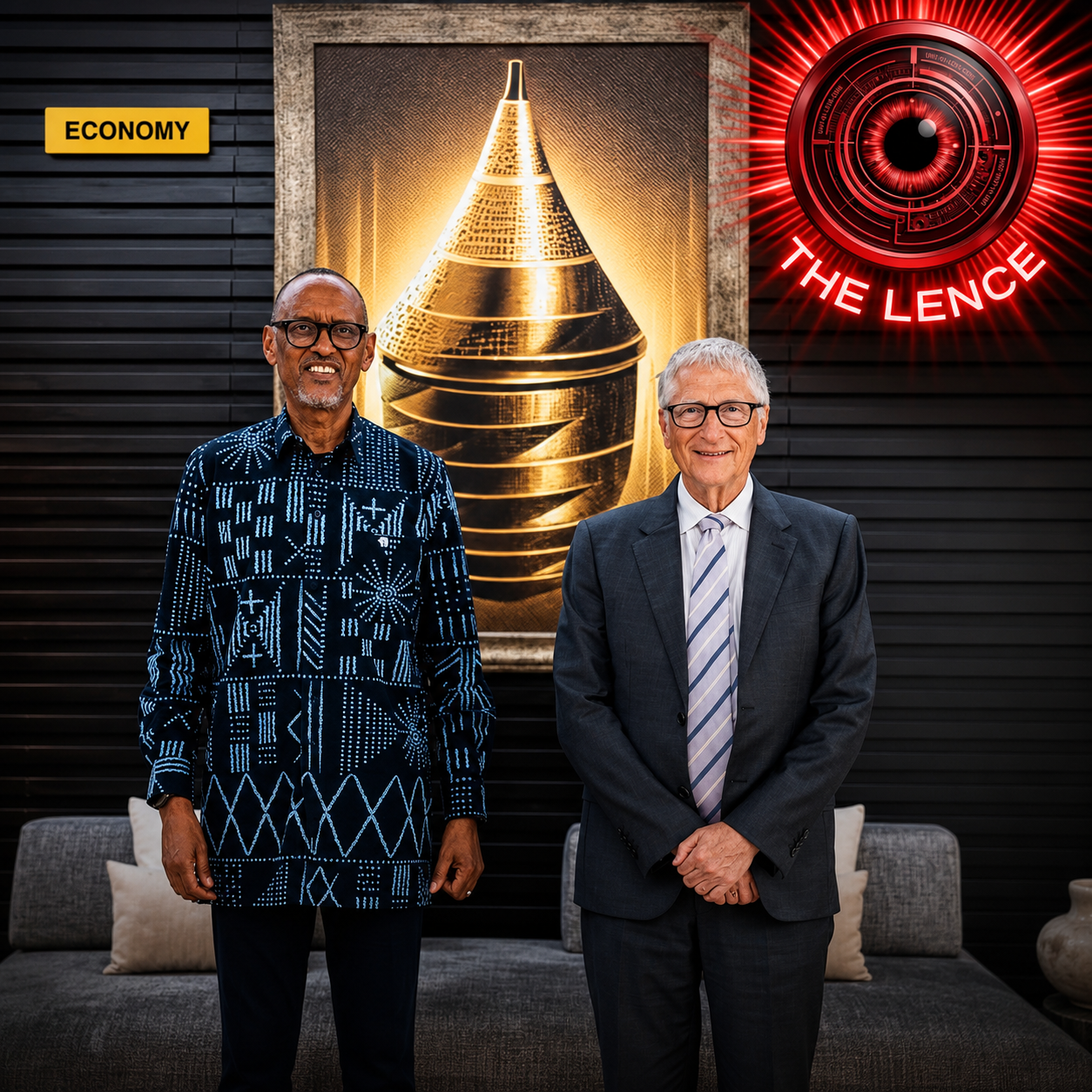
Paul Kagame does not do photo opportunities. He does deals.
So when Bill Gates flew into Rwanda yesterday, the cameras caught a handshake.
The real conversation happened behind closed doors. And it is worth decoding.
The Gates Foundation has been in Rwanda for over 15 years. Vaccines. Malaria nets. Agricultural research. Over 1 billion dollars committed to the continent.
But this meeting was different.
They talked about artificial intelligence. They talked about digital public infrastructure. They talked about turning Rwanda into what Gates called a model for the continent.
Here is what that means in plain terms.
Rwanda wants to leapfrog. It skipped landlines and went straight to mobile. It skipped traditional banking and built mobile money.
Now it wants to skip the Western healthcare model and build AI driven diagnostics, drone delivered medicine, and digital ID systems that actually work.
Gates wants a proof of concept. A small, controlled, tech friendly nation where Foundation ideas can be tested, measured, and exported. Rwanda is 13 million people. Manageable. Centralized. Willing.
Kagame wants credibility.
A partnership with the world's most famous philanthropist signals stability to investors still wary of 1994.
It signals progress to a diaspora he needs to return. It signals that Rwanda is not just recovering. It is building.
But here is the history your headline will not teach you.
The Gates Foundation is not a charity. It is the world's largest private foundation with 75 billion dollars in assets. It invests in companies. It shapes global health policy. It funds the research, buys the vaccines, and helps set the prices.
Critics call it philanthrocapitalism. Supporters call it results.
Rwanda is not a typical African state. Kagame has been in power since 2000.
The economy has grown at 7 percent annually. Kigali is the cleanest capital on the continent. But human rights groups document disappearances, exiled dissidents, and a press freedom ranking near the bottom globally.
So what is this partnership really?
It is a transaction. Gates gets a laboratory for tech driven development. Kagame gets a stamp of approval from the global elite.
Rwandans get better healthcare and digital tools. The question is what they give up in return.
Data sovereignty? Policy independence? The right to say no when the next partnership is offered?
The 1994 genocide taught Rwanda that the world will watch and do nothing. Kagame built a nation on the idea that Rwanda must save itself. But self reliance in a globalized world looks like selective partnership.
It looks like this handshake.
In 1960, newly independent African nations took aid from the West and called it cooperation.
In 1990, they took structural adjustment loans and called it development. In 2026, they take AI partnerships and call it transformation.
The language changes. The power imbalance does not.
So is Rwanda building the future or selling the present? Is Gates investing in Africa or buying influence?
The drone delivering blood in rural Rwanda does not care about the answer. The patient receiving it might.
Comments (0)
No comments yet. Be the first!
Leave a Comment