


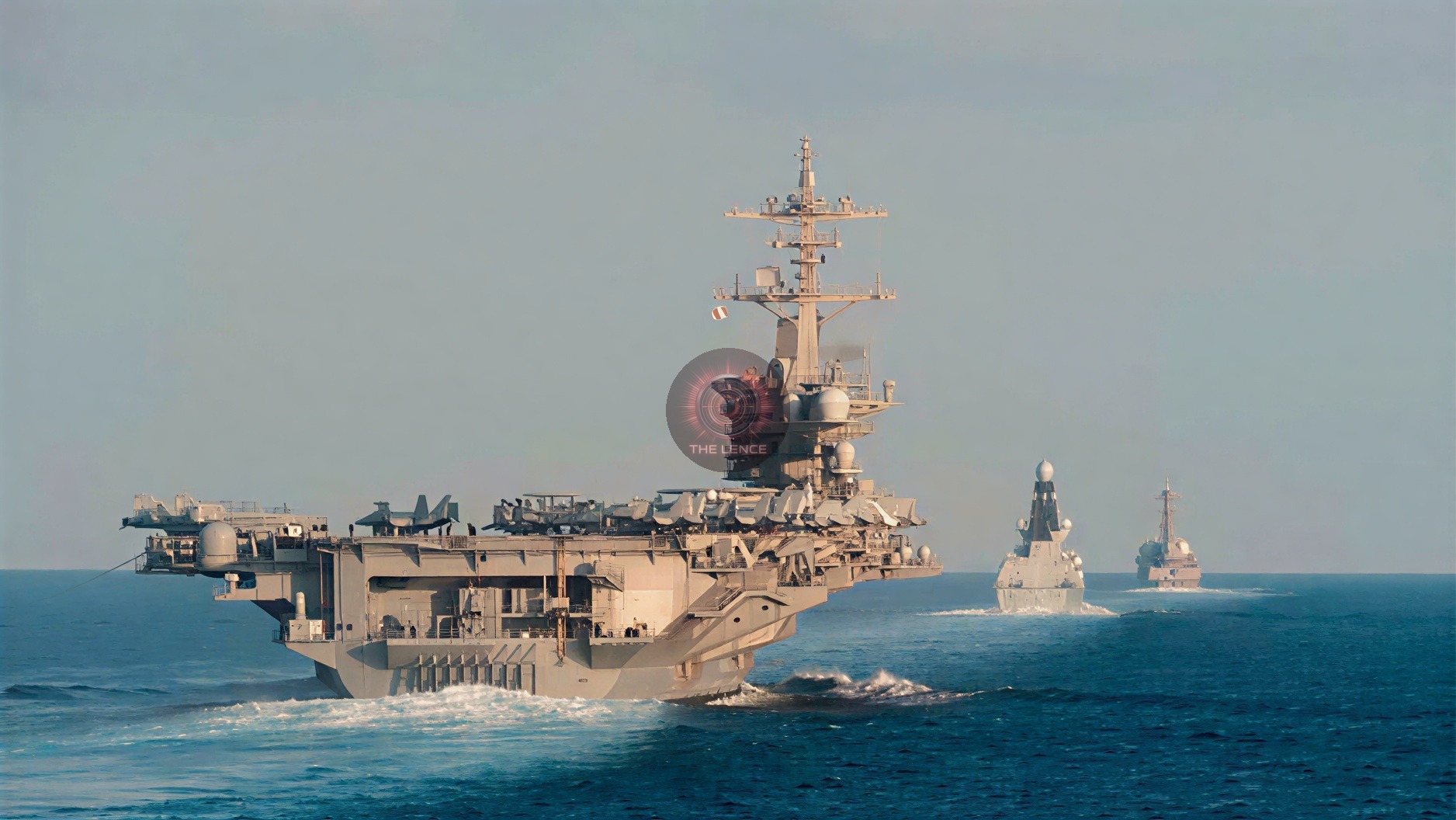
US Military to Blockade Ships from Iranian Ports in Strait of Hormuz.
Rising Oil Prices and Economic Impact
Oil prices have surged past $100 a barrel as the imminent US military blockade of Iranian ports in the Strait of Hormuz threatens to further disrupt the global economy. This decision comes after peace talks in Pakistan over the weekend failed, escalating tensions between Iran and the US. The Islamic Revolutionary Guard Corps (IRGC) of Iran has vowed to retaliate against this blockade.
Global Reactions and Pope's Criticism.
Pope Leo XIV has openly criticized President Donald Trump's stance on the Iran conflict, stating he has "no fear of the Trump administration" and will continue to voice his opinions on the matter. President Trump responded by denouncing the Pope's views as "terrible for foreign policy."
Market Volatility.
The looming blockade has caused significant fluctuations in the stock markets, with oil prices once again exceeding $100 a barrel. The global economy faces further disruption as the Strait of Hormuz, a critical oil passageway, becomes increasingly unstable. This waterway, crucial for the transport of oil from countries like Saudi Arabia and Kuwait, was responsible for about 20% of global oil shipments before the conflict.
The Strategic Importance of the Strait of Hormuz.
The Strait of Hormuz is a narrow waterway that serves as a vital shipping lane for crude oil and liquefied natural gas. It handles about 20 million barrels of oil daily, accounting for roughly one-fifth of the world's oil production. According to the US Energy Information Administration, the channel is considered a "critical oil chokepoint," and few alternative routes exist if the strait is closed.
International Efforts and Israeli Developments
President Trump has urged other nations to send warships to assist in reopening the strait, but his calls have met with limited enthusiasm. The US military's blockade aims to prevent ships from entering or leaving Iranian ports, beginning at 10 a.m. ET today.
Israeli Security Measures.
In related developments, Israeli Prime Minister Benjamin Netanyahu has announced plans for a "solid, deeper security zone" in southern Lebanon, ahead of direct talks between Israel and Lebanon in the US. Netanyahu emphasized that any agreement would require Hezbollah's disarmament and be a lasting peace deal. He also expressed support for the US blockade of Iran.
In conclusion, the blockade of the Strait of Hormuz symbolizes a significant escalation in the geopolitical tensions between Iran and the US. The situation's impact on global oil prices and the broader economy remains uncertain, with potential long-term consequences as negotiations and military actions unfold.



Comments (0)
No comments yet. Be the first!
Leave a Comment